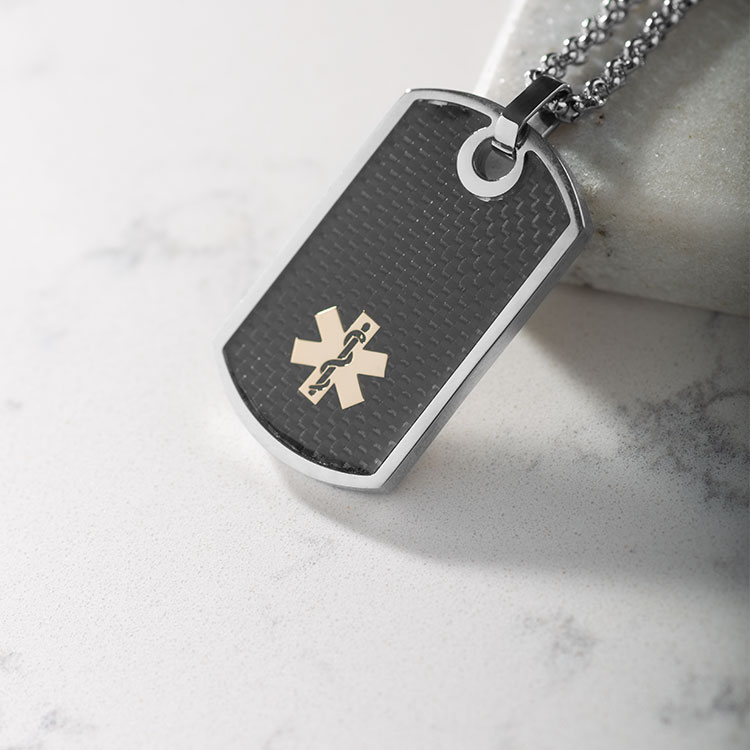
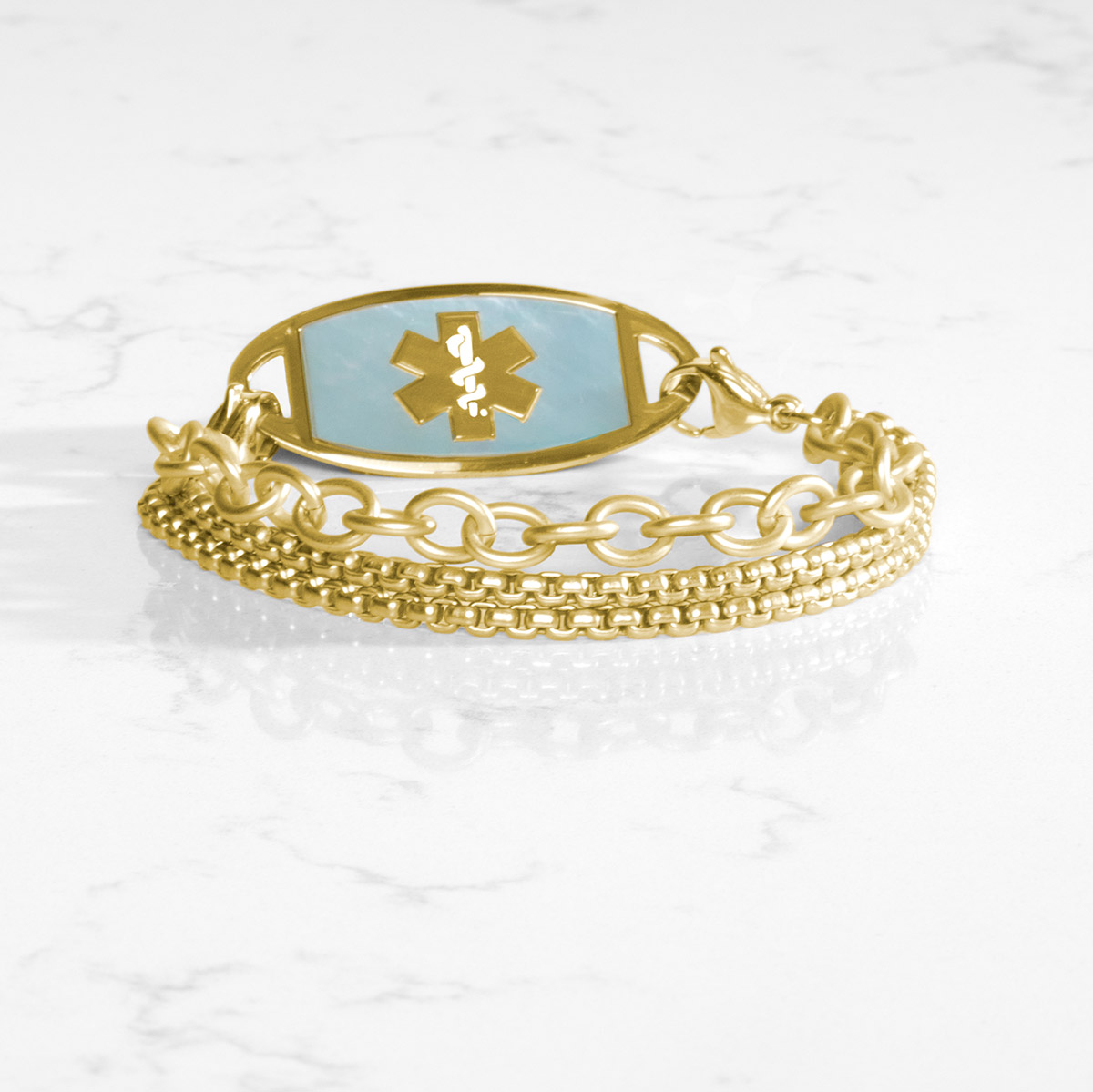
01 Identify
Why Choose Custom Engraving?
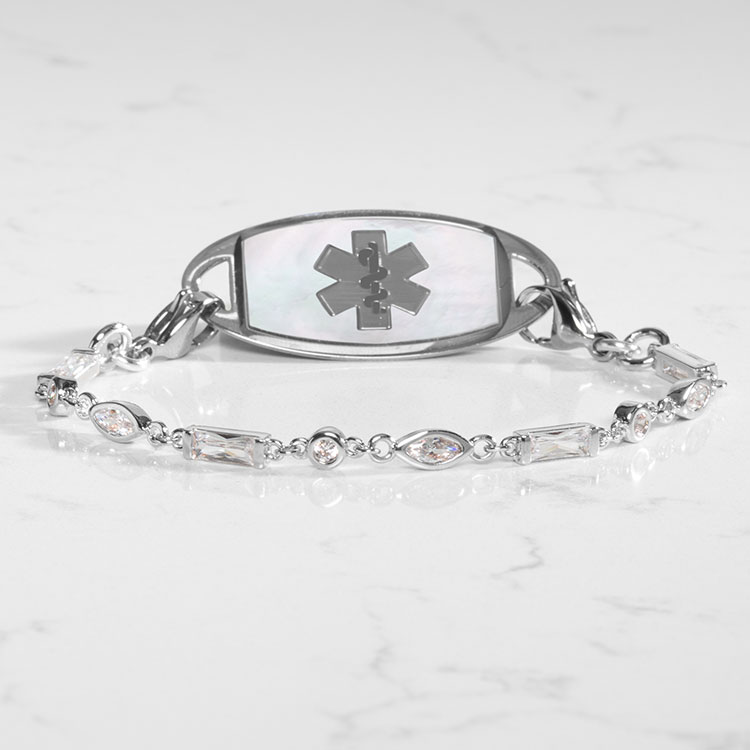
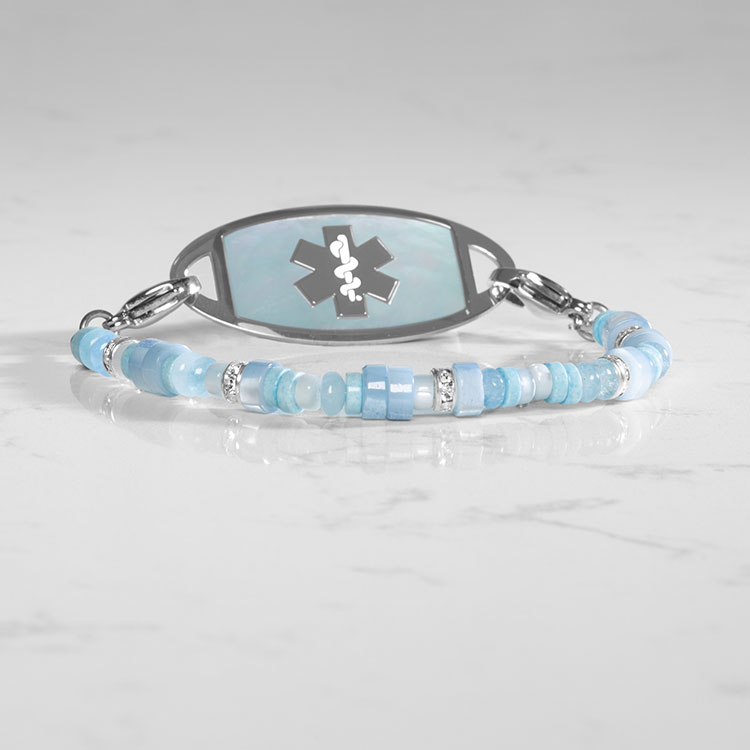
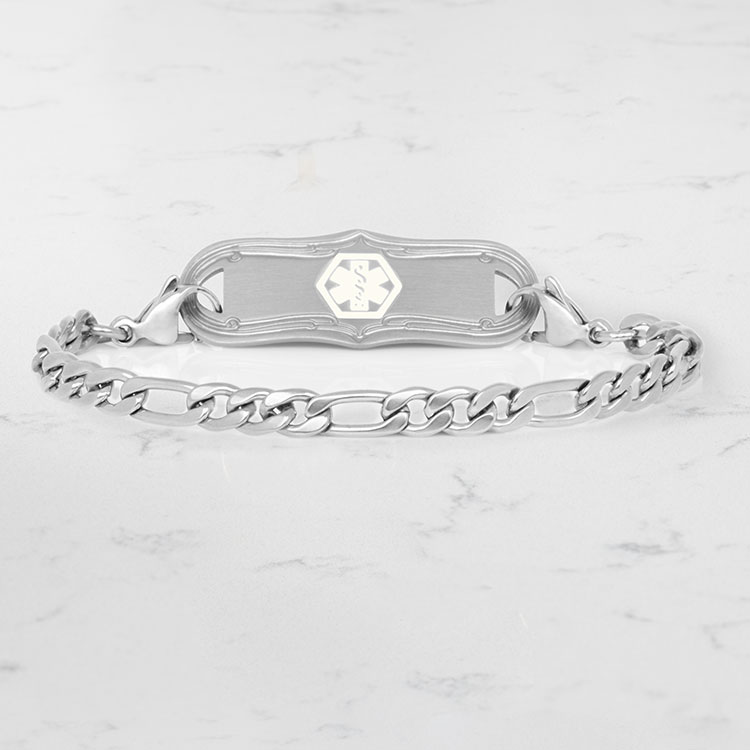
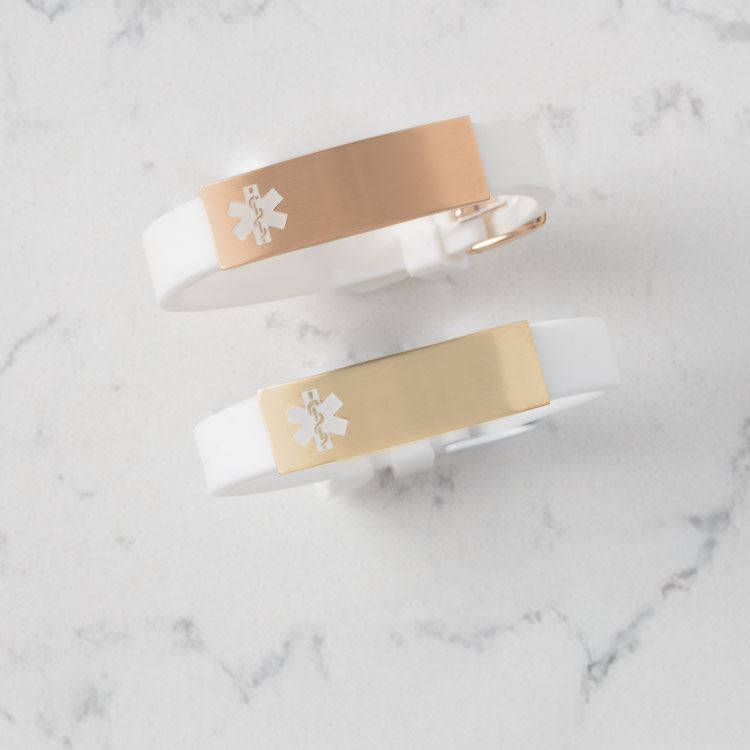
Medical caduceus symbols identify a medical alert, while custom engraving adds identity, medical details, care directions, and emergency contacts.
A personal guide to engraving
What should you put on a medical alert bracelet? Include the confirmed information a first responder may need quickly during an emergency, such as a severe allergy, critical medication, medical condition, or implanted device, then add an ICE contact when space allows.
Updated October 6, 2026 | Medical ID specialists since 2001

Ready to choose your medical ID?
PLAN YOUR ENGRAVING
Many Lauren's Hope medical IDs allow six lines. Organize your most important information, preview how it fits, and copy your plan when you're ready to shop. Exact capacity varies by product.
Interactive planning is available when the planner finishes loading. If it remains unavailable, use the engraving examples below and call 800-360-8680 for help.
SEARCH BY KEYWORD
Search a condition, medication, allergy, implanted device, restriction, or emergency detail. Add a suggestion to the planner, then personalize and confirm it.
Suggestions are controlled starting points based on commonly used medical ID wording and Lauren's Hope engraving experience. A spelling suggestion is never applied automatically. Personalize and confirm medical information with your healthcare professional.
LIVE 6-LINE TAG PREVIEW

This planning preview shows how six lines work together. Final spacing and capacity depend on the medical ID you choose.
TAKE YOUR PLAN WITH YOU
Copy your engraving lines to use while shopping for a medical ID.
Review your medical wording before ordering. The number of lines available depends on the medical ID you choose.
Common Engraving Elements
Add your name when space allows and identification is a priority.
Include a confirmed condition, pacemaker, ICD, insulin pump, or similar device.
Use ON before the exact medication name so its meaning is clear.
Use ALGY or ALGYS before medication, food, or material allergies.
Add a confirmed instruction that could affect immediate care.
Include ICE and the best current emergency contact number, including the area code.
A Practical Engraving Priority Plan
There is no single order that fits everyone. Depending on your medical needs, a severe allergy, critical medication, primary condition, implanted device, or confirmed care direction may need to appear first. Use the framework below to organize the remaining information, and confirm your personal priorities with a healthcare professional.
This may be a severe allergy, critical medication, primary condition, implanted device, or confirmed care direction.
Include your first and last name when identification is a priority and space permits.
Use ON before a medication you take and ALGY or ALGYS before a confirmed allergen.
Name a confirmed condition, pacemaker, ICD, insulin pump, or similar device when it could affect emergency care.
Use a confirmed restriction or point to supporting information that changes or will not fit.
Add the best current emergency contact number and include the area code.
The Practical Rule
Lead with the confirmed detail that could matter most. Use the remaining lines for clear identification, supporting medical information, and an ICE contact.
Why Lauren's Hope Recommends Custom Engraving
Custom engraving places important information where a first responder can see it immediately. Use the limited space for details that could affect urgent care, then direct the reader to a wallet card or digital profile for supporting information.
01 Identify
Medical caduceus symbols identify a medical alert, while custom engraving adds identity, medical details, care directions, and emergency contacts.
02 Keep Visible
A QR code or online profile can support secondary information, but requires another step and compatible technology. Keep urgent information readable on the jewelry; never place its only copy behind a QR code, USB drive, password, internet connection, or online profile.
03 Plan First
Capacity varies by product and tag shape. Planning the wording first helps you choose enough room or decide when SEE WALLET CARD is clearer.
04 Confirm
Medication names can be similar. Spell-check the exact name, label whether you take it or are allergic to it, and confirm the final wording with your healthcare professional.
Lauren's Hope First Responder Survey
In 2020, Lauren's Hope surveyed more than 100 EMTs, paramedics, ER doctors, and other frontline medical care providers about how medical IDs are used in emergency settings.
95%+ Patient Outcomes
Respondents cited faster treatment, greater treatment accuracy, fewer unnecessary tests, and other possible benefits.
87% Treatment Speed
Respondents said clearly identifiable medical information may help when the wearer cannot speak for themselves.
100% USB Access
Respondents described time, policy, privacy, and technology barriers to using USB drives during emergency care.
80%+ Preferred Format
Respondents identified custom engraving as the most effective option because it can be specific to the wearer.
In Their Words
“EMS generally doesn't have the time or resources to check on USB or other types of electronic medical IDs.”
— Emma R., EMT-B
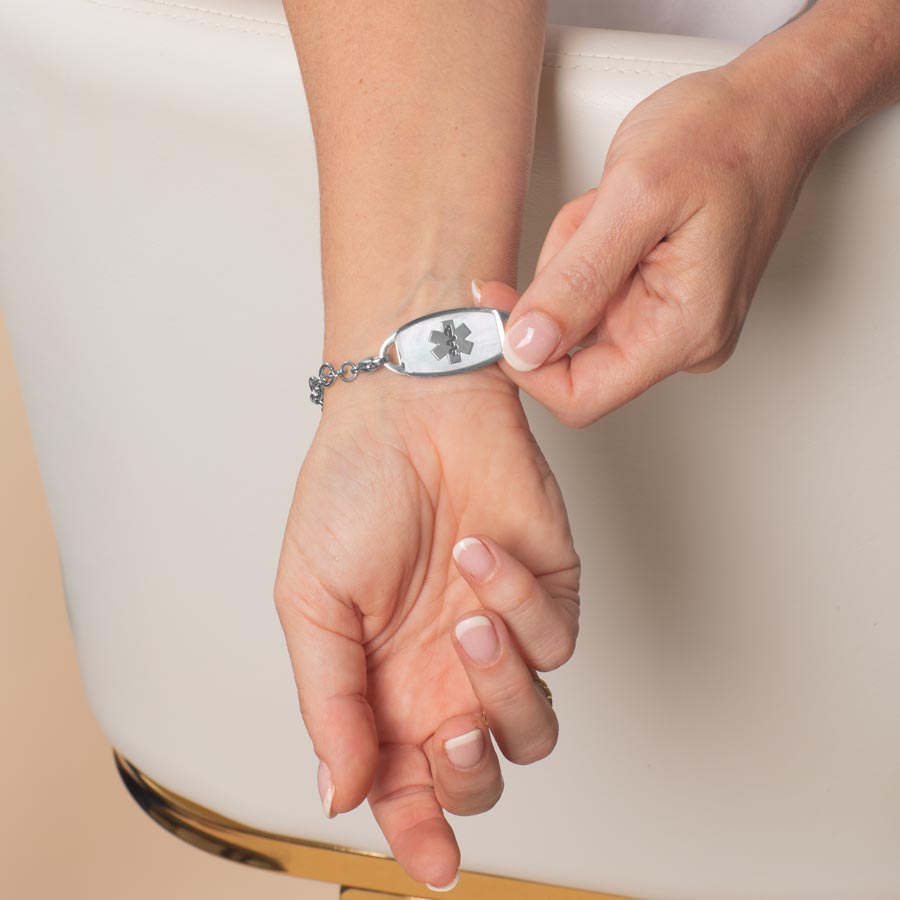
Coastal In Silver + Mother Of Pearl
Mother of pearl gives every Coastal tag its own softly reflective pattern, while the centered medical symbol keeps its purpose easy to recognize. Personalize the back with the confirmed engraving plan that matters most to you.
Shown: Coastal Mother Of Pearl Tag In Silver
Explore Medical ID TagsCHOOSE A STARTING POINT
Select the example closest to your situation. See what each line is doing, then place all six lines into the engraving planner, where every word can be edited.
SELECTED EXAMPLE
Connect the diagnosis to insulin and supporting information.
Planning example only. Personalize and confirm your wording.
WHY EACH LINE IS HERE
The condition, medication, and device are labeled clearly. Supporting details stay on the wallet card. Personalize and confirm every line.
Nothing is submitted or saved.
Read Diabetes GuidanceName the implanted device and use only confirmed device details.
Six-line sample:
JANE CRAWFORD ·
PACEMAKER ·
MRI CONDITIONAL ·
ALGY: PENICILLIN ·
SEE WALLET CARD ·
ICE 555-456-7896
Use MRI CONDITIONAL only when that exact wording is confirmed for the wearer's device.
Read Pacemaker GuidanceName the exact medication and make the relationship explicit.
Six-line sample:
JAVIER R. ·
A-FIB ·
ON PRADAXA ·
ALGY: PENICILLIN ·
SEE WALLET CARD ·
ICE 555-456-7896
ON PRADAXA shows that Pradaxa is a medication the wearer takes, not an allergy.
Read Blood Thinner GuidanceLabel each allergen so it cannot be mistaken for a medication.
Six-line sample:
JANE CRAWFORD ·
ALGY: PENICILLIN ·
ALGY: LATEX ·
CARRIES EPIPEN ·
SEE WALLET CARD ·
ICE 555-456-7896
Keep each confirmed allergen clearly labeled. Do not guess whether a reaction is an allergy.
Read Serious Allergies GuidancePair the diagnosis with a short, clinician-confirmed response detail.
Six-line sample:
JANE CRAWFORD ·
EPILEPSY ·
SEIZURE PROTOCOL ·
ALGY: PENICILLIN ·
SEE WALLET CARD ·
ICE 555-456-7896
Use only current, confirmed response wording and keep the full plan on a wallet card.
Read Seizure Disorder GuidanceState the exact side and restriction so the direction is actionable.
Six-line sample:
JANE CRAWFORD ·
LYMPHEDEMA ALERT ·
NO BP/IV RT ARM ·
ALGY: PENICILLIN ·
SEE WALLET CARD ·
ICE 555-456-7896
Personalize the side and restriction, then confirm the wording with a healthcare professional.
Read Limb Alert GuidanceMake Every Word Unmistakable
A medication name by itself can mean two very different things. Add a short label so the reader does not have to guess.
Clear Wording
Relationship is immediately clear.
Avoid Wording Like
The reader cannot tell medication from allergy.
Not every medication reaction is an allergy. If you are unsure how a reaction should be described, ask your healthcare professional before engraving it.
Before You Order
Choose Your Engraving Finish
Both options use the same engraving plan. The difference is how strongly the engraving contrasts with the stainless-steel tag.
Higher-Contrast Engraving
Bold, dark lettering creates stronger visual contrast against the stainless-steel tag.

More Subtle Engraving
Tone-on-tone lettering is subtler and may need to be tilted toward the light to read.
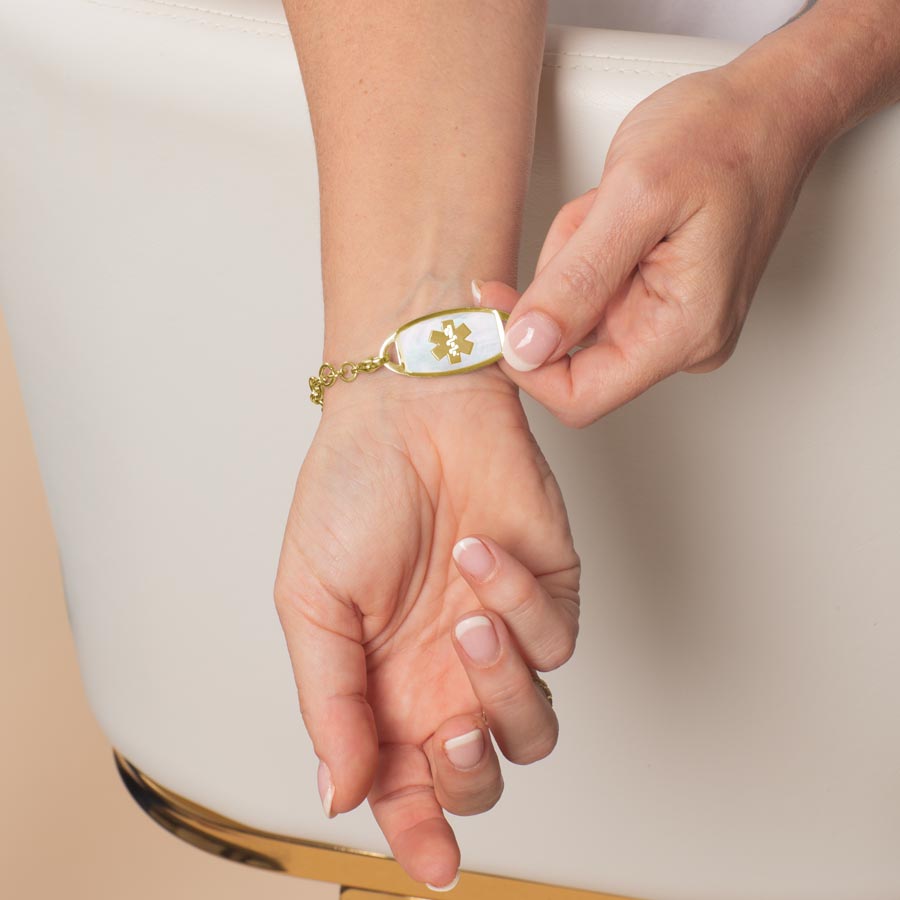
Mother Of Pearl In Gold
The Coastal tag pairs a softly luminous mother-of-pearl inlay with warm gold-tone metal. Use the back for the confirmed engraving plan that matters most to you.
Shown: Coastal Mother Of Pearl Tag In Gold
Explore Medical ID TagsNot Enough Space?
Abbreviations save space only when the reader can understand them immediately. Use familiar medical abbreviations, spell out anything unclear, and confirm your final wording.
When Six Lines Aren’t Enough
Keep urgent, immediately useful information on your jewelry. Then use “SEE WALLET CARD” to point to supporting details you carry with you. Don’t leave the only copy of urgent information behind a QR code, password, or internet connection.
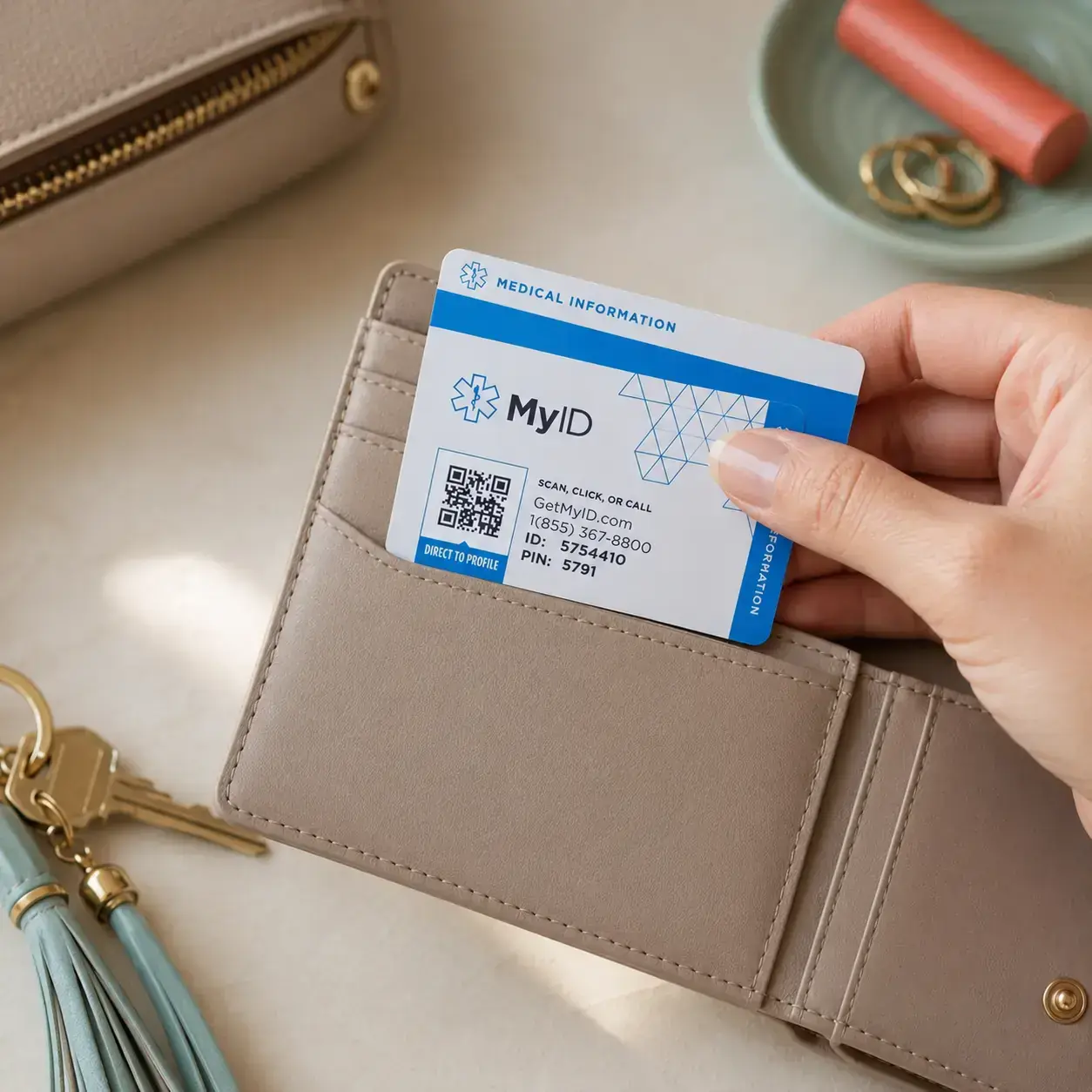
Jewelry first. Wallet card second. Your engraving provides the immediately visible alert; the wallet card adds detail when someone needs it.
Ready To Put Your Plan On A Tag?
The best medical ID is one that fits your information, your routine, and your personal style.
Keep Your Information Current
Review your medical ID whenever an important medication, allergy, diagnosis, implanted device, care direction, or emergency contact changes. If your engraving is no longer accurate, update your ID and any supporting wallet card or online profile.
Medical ID Engraving FAQ
Your name can help a first responder identify you and connect you with the correct emergency contact or medical information. It does not have to be the first engraved line for every person. Include it when identification is a priority and space allows, after any confirmed medical detail that may be more urgent in your situation.
Prioritize confirmed conditions that could cause an emergency, change immediate treatment, or explain why you may be unable to communicate. A severe allergy, critical medication, implanted device, primary diagnosis, or treatment restriction may deserve the first line depending on your needs. Do not try to fit every diagnosis on the jewelry. Confirm the priorities and exact wording with your healthcare professional.
Prioritize the confirmed condition, allergy, medication, implanted device, or care direction most likely to affect immediate treatment. Add other important conditions as space permits. If everything will not fit clearly, engrave SEE WALLET CARD and keep the supporting information current.
Include confirmed medications and allergies that could change emergency treatment, and label the relationship so the reader does not have to guess. Use wording such as ON ELIQUIS for a medication you take and ALGY: PENICILLIN for a confirmed allergy. If a medication is changing, ask your healthcare professional whether broader wording plus SEE WALLET CARD is appropriate, then keep the current medication details with the card.
ICE means In Case of Emergency. Place ICE before the best current emergency contact number so the relationship is clear, and include the area code. Check the number regularly and update the jewelry or supporting wallet card when the contact changes.
Engrave the most urgent, immediately useful information and add SEE WALLET CARD to direct the reader to supporting details. A paper or QR wallet card can hold longer medication lists, physicians, history, insurance, and additional contacts. Do not place the only copy of urgent information behind a QR code, USB drive, password, internet connection, or online profile.
Consider a short restriction or care direction only when it has been confirmed for you and could affect emergency care. Make it specific enough to be actionable. For example, LYMPHEDEMA ALERT paired with NO BP/IV RT ARM identifies both the condition and the affected side. Do not copy a sample without personalizing it. Verify the restriction, side, priority, and exact wording with your healthcare professional.
ICE is a commonly used abbreviation for In Case of Emergency and helps label an emergency contact number. It should support the urgent medical information on the jewelry, not replace it. Include the area code, choose a person who can answer questions about your care, and confirm that the number remains current.
Lauren’s Hope recommends keeping urgent information immediately readable on the jewelry. A QR code requires a compatible phone and an additional scanning step, so it is better used for supporting information than as the only source of critical details. Pair custom engraving with a QR wallet card or paper wallet card when you need room for a longer medical profile.
Your Engraving Plan Is Ready
Choose a collection designed for the wearer, then check that the product has room for the engraving lines in your plan.
Explore interchangeable, stretch, 24/7 wear, silicone, and classic styles designed for everyday wear.
Explore Women’s Medical IDs MenFind bracelets, dog tags, necklaces, and comfortable options that fit naturally into a daily routine.
Explore Men’s Medical IDs KidsShop adjustable, waterproof, and easy-to-wear medical IDs for school, activities, travel, and home.
Explore Kids’ Medical IDsNeed to adjust a line before you shop?
Review My Engraving